How to choose
How to choose a UK dash cam
Two questions usually settle it. Is the camera likely to catch a clear number plate at night? And will parking mode keep recording once your car's switched off? Screen size, voice control and most of the extras on the box come after those.
How do you choose a dash cam?
Start with night plates and parking, then decide on front only or front and rear. We'd look for a named Sony STARVIS 2 sensor, plan on a hardwire kit if you want it recording while you're parked, and add a rear camera if you're worried about car-park bumps. The five steps below take you through it.
1. Night performance and number plates
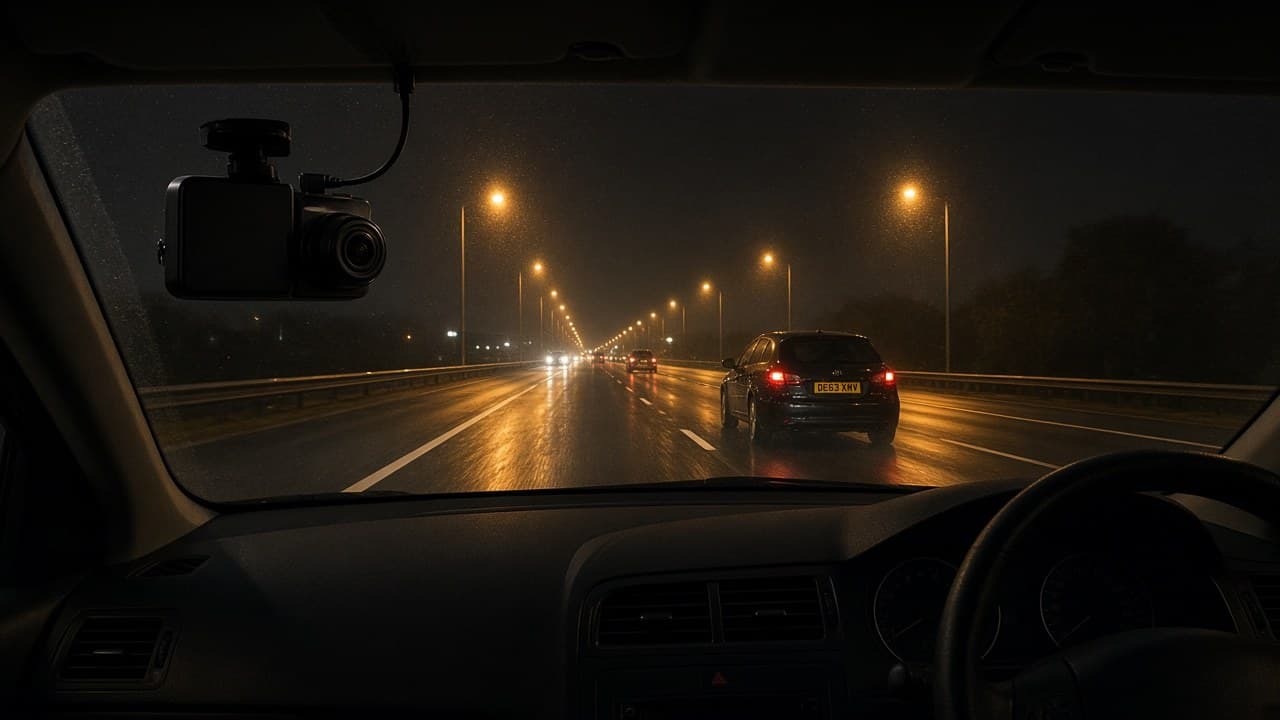
If something happens, what you'll usually want from the clip is a still that shows a UK number plate. In daylight, most 1440p cameras are fine. After dark, the sensor matters more than a 4K badge. So when a maker lists a Sony STARVIS 2 sensor such as IMX678, IMX675 or IMX662, we'd treat that as a better starting point than an unnamed “night vision” claim.
We don't film our own plate tests, so our night grades are based on the published specs. Have a look at the method page before you read a letter grade as a lab result.
 Illustrative image
2. Parking mode needs a hardwire kit
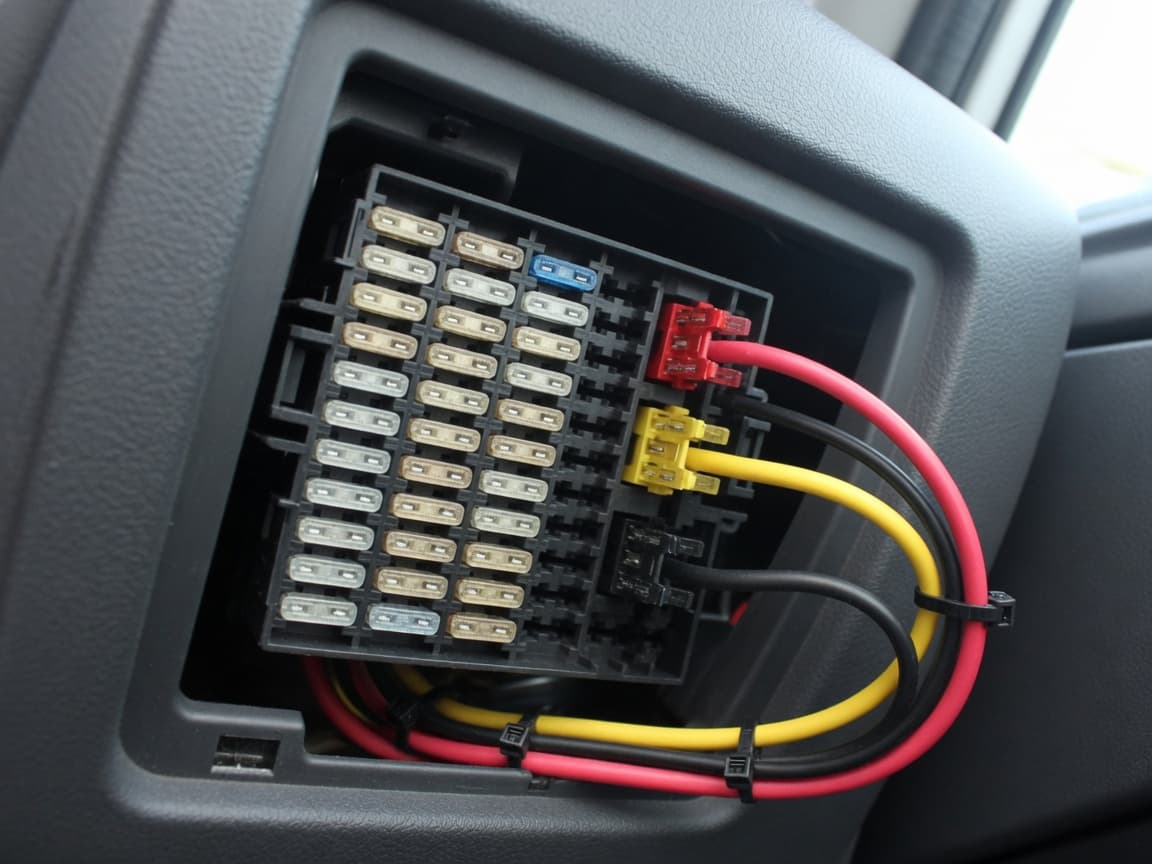
Here's the thing: parking mode gets talked up a lot, but plenty of kits still come with a lead that only works while the ignition's on. Lock the car, the power drops and the camera stops. So if someone bumps you in a car park later, you've got no file.
A hardwire kit usually connects to a permanent live, an ignition live and earth at the fuse box. It should have a low-voltage cutoff, so the camera stops before your battery's too flat to start the car. Thinkware and BlackVue also sell battery packs, which are another honest way to keep the power on. Worth knowing: a short clip saved as the camera loses power isn't the same as parking mode that keeps recording. If you'd like the fuller picture, including which kits each camera needs, have a read of parking mode and hardwire kits explained.
 Illustrative image
 Illustrative image
3. What kind of parking mode
It depends what you're worried about. G-sensor modes wake the camera when they feel a bump, so they can catch a hit, but they'll miss someone walking round your car without touching it. Buffered event recording keeps a short rolling buffer, so the saved clip includes the seconds before the impact. VIOFO lists this on the A119 Mini 2 and A229 Pro.
Time-lapse modes save card space, but they're weaker if you need a plate at full resolution. Radar modes let the camera stay mostly asleep until something moves nearby. Thinkware builds this into the U3000 PRO and sells it as an add-on puck for the Q1000, and it's how overnight monitoring can last longer without recording at full power the whole time.
Cloud or LTE features can send you alerts while you're away from the car. They're handy if you like to check in remotely, but they still need a live power supply, and the BlackVue LTE model needs a SIM too.
4. Front, rear, or both
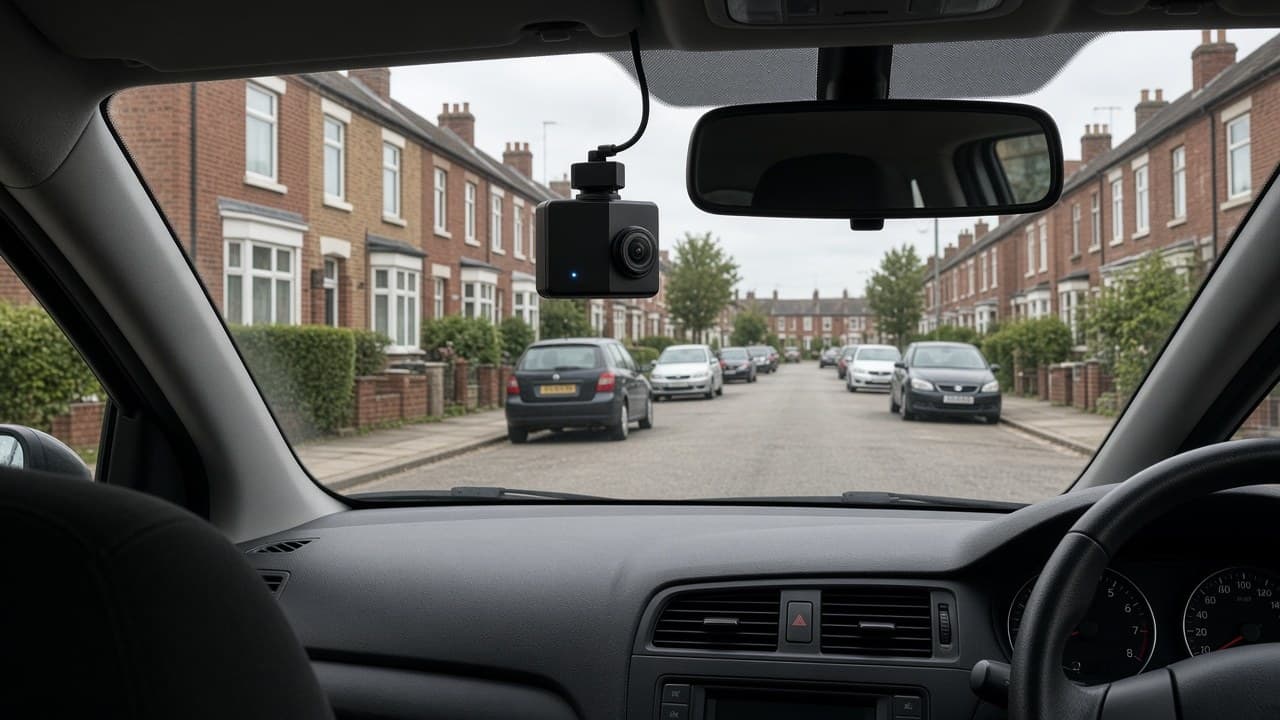
If you're worried about bumps from behind, we'd go for both. A front-only camera is cheaper and easier to keep discreet, but it won't show a rear impact. Dual kits add a rear-window camera on a cable routed through the headlining. Cabin cameras are mainly for ride-hail work, and they raise privacy questions in a private UK car. If you're fitting a camera in a van, see best dash cam for a van UK for cab-height and reverse-coverage notes.
If you're weighing up better footage against stronger parking features, we'd start with the Best 5. For a direct comparison, read Nextbase 622GW vs VIOFO A229 Pro, or Thinkware U3000 PRO vs BlackVue DR970X.
5. What to ignore on the box
We'd take star ratings copied from a shop, prices printed as if they never change, and “24/7 parking” claims that don't mention a hardwire kit with a pinch of salt. Voice assistants such as Alexa only matter if you actually want to talk to your camera. We don't print prices here because they change, so the Amazon button opens the live listing instead.
When you're ready to choose, use the Best 5 for five recommendations by use case, the van guide if you need dual coverage in a commercial cabin, parking mode and hardwire kits if overnight recording is the question, the reviews index for every camera on this site, and the method page if you want to know what our letter grades mean.
Common questions
- Does parking mode work from the cigarette-lighter socket?
- Usually not. That socket loses power with the ignition, so the camera stops when you lock the car. If you want parking mode to keep recording, you’ll need a hardwire kit or a dedicated battery pack, with a low-voltage cutoff so your battery can still start the car in the morning.
- Do I need a rear camera?
- If you want car-park bumps on camera, yes. A front-only camera can’t show who reversed into you. Honestly, a 2K rear camera is often more useful day to day than chasing a higher front resolution with nothing covering the back of your car.
- Is 4K required for a UK number plate?
- Not in daylight, usually. After dark, the sensor class tends to matter more than the resolution on the box, so we’d rather see a named Sony STARVIS 2 sensor than 4K on an unnamed chip. We won’t make up plate-read distances.
- Will a dash cam reduce my insurance?
- It might. Some UK insurers offer a discount if you declare a camera, but that’s one to ask your insurer, and we can’t promise it. Either way, footage can still help a claim even if your premium doesn’t change.